

EV charger with a low contracted power: how to install it without raising your supply
Published on 6 October 2026
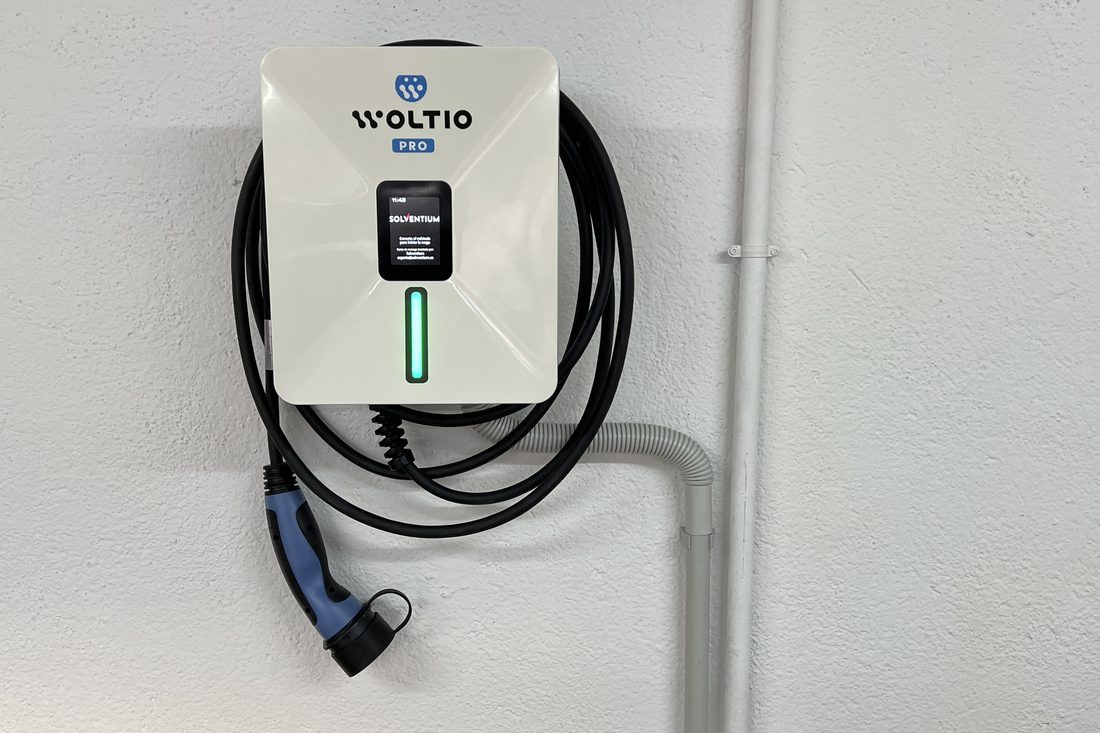
Yes, you can almost always install an EV charger with 3.7, 4.6 or 5.5 kW contracted without raising the power of your electricity contract. What makes it possible is dynamic load balancing: a sensor measures what your home is using and the charger shares out only what is left over. What sets the price is not the kW but the metres of cable to your space and the work along the way.
In the last two weeks five people have written to us with this same question. One has 3.7 kW contracted, another 4.6, another 5.5 and another 5.85. Most have their space in a shared garage. This is what we told them.
Quick answer
- With 3.7 kW contracted: it can be done, and you will charge more slowly. A car recovers about 160 km in a ten-hour night if the house is using 1 kW.
- With 4.6 to 5.85 kW: it works well. The charger is still a 7.4 kW unit, but the car receives whatever the house leaves free.
- You do not need to raise your contracted power unless you already run short without the car, for example with an electric hob or aerothermal heating.
- Typical price: between €1,450 and €1,950 with everything included, depending on the metres and the work involved. Details in how much it costs to install a charging point.
What 7.4 kW on the charger and 5.5 kW on your contract mean
They are two numbers for two different things. The contracted kW are the limit for your whole home: fridge, oven, water heater and car together. The charger's kW are the most the unit can send to the car.
The basic sum is voltage times current. A single-phase charger at 230 V and 32 A gives about 7.4 kW; at 16 A, about 3.7 kW. That is the ceiling of the unit. What the car actually receives is also decided by what is left free on your contract at that moment.
That is why a 7.4 kW charger in a home with 5.5 kW contracted is normal, not a mistake. What cannot happen is a 7.4 kW charger with nothing watching how much the house is using.
How dynamic load balancing works
The charger comes with a sensor that measures your home's consumption in real time. If the house is quiet, the car charges at almost the power your contract allows. If you switch on the oven, the charger backs off and recovers afterwards. The total never exceeds what is contracted, so the circuit breaker does not trip and you do not need to touch your contract.
An example with round numbers. You have 3.7 kW contracted and at night the house uses 1 kW. That leaves 2.7 kW for the car. In ten hours that is about 27 kWh: at around 17 kWh per 100 km, roughly 160 km of range. For a normal week of city driving, that is enough.
With 5.5 or 5.85 kW it gets considerably better. With 3.7 kW it works, but you notice it: if the car has a large battery and you drive a lot, you will charge more slowly.
3.7 kW or 7.4 kW charger?
One of the people who wrote to us asked for a price for both options. It is a good question. This is what we see:
- With dynamic balancing, the difference in safety is minimal. In both cases the system respects your contract.
- The 7.4 kW unit leaves the installation ready. If in a year you raise your power or switch to a car that charges faster, you do not have to touch anything.
- The 3.7 kW unit is usually somewhat cheaper, although the advisor confirms the difference once they have seen your case.
- In a plug-in hybrid the battery is small and the difference between 3.7 and 7.4 kW is barely noticeable: it fills up overnight either way.
Our usual recommendation is the 7.4 kW unit with balancing, unless the budget is very tight.
Which chargers come with dynamic balancing
This is what the data sheets say for the five chargers we install:
| Charger | Load balancing | From |
|---|---|---|
| Woltio Pro | Dynamic, with measuring clamp included | €1,479 |
| Policharger NW | Dynamic power management | €1,549 |
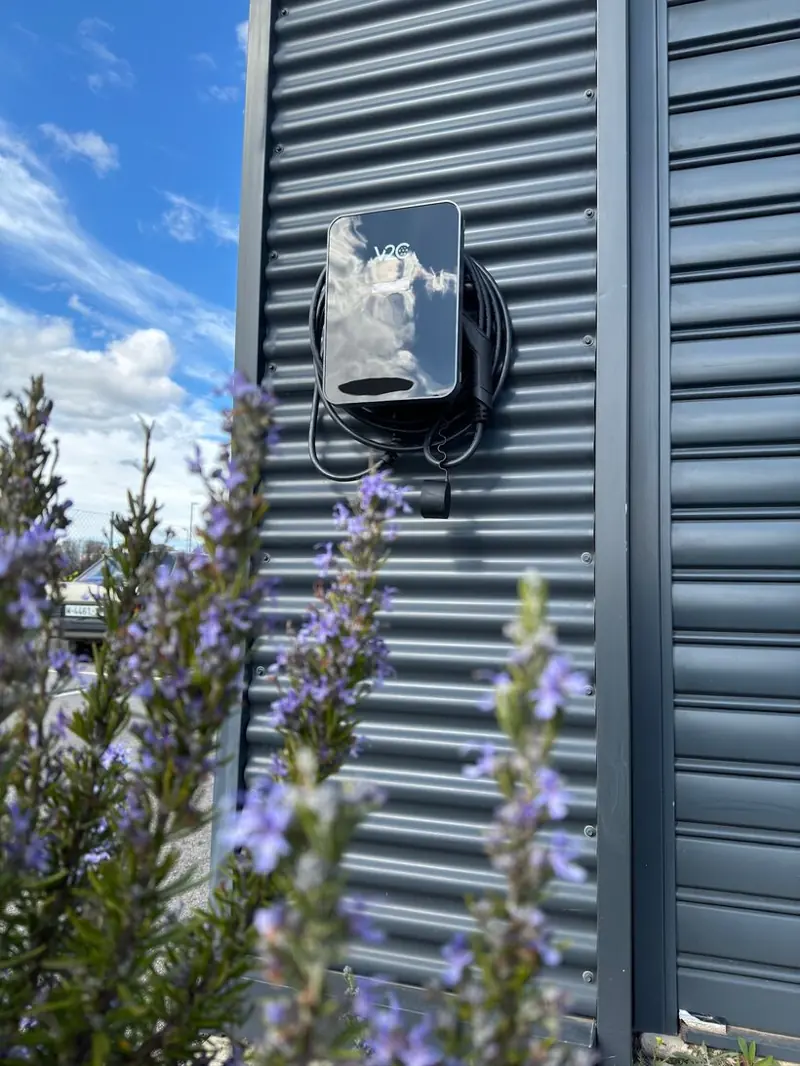
| V2C Trydan | Dynamic power management | €1,599 |
| Wallbox Pulsar Plus | Power balancing, optional (Power Boost accessory) | €1,649 |
| Tesla Wall Connector | Optional, with Neurio kit | €1,749 |
Prices are for a complete installation: unit, materials, protective devices, labour, commissioning, certification and ten years' warranty on the installation. On the last two, the balancing is added during installation when needed: ask what that accessory costs before comparing prices, because that is where the sum changes. You can see them all on the chargers page.
What makes an installation more expensive, more than the kW
Contracted kW are almost never what pushes the quote up. What does:
- The metres from the meter to your space. In a shared garage it can be 20 m or more than 45.
- If a floor slab has to be crossed, for example with the space on level -1 and the meters on the ground floor.
- The level of the space and any work along the route.
That is why a fixed price requires knowing the route. If your space is in a shared garage, you do not need the owners' meeting's permission either: you only have to notify them. We explain it in installing a charger in a residents' association.
Grants in 2026
The MOVES III Plan ended on 31 July 2025 and can no longer be applied for. Today two routes remain:
- 15% income-tax deduction, on a maximum base of €4,000 (up to €600), for installations completed before 31 December 2026, in a property you own and paid by bank transfer or card, never in cash.
- Energy Savings Certificate (CAE): €600 from the managing body if you have scrapped or sold a combustion car that had been yours for more than a year. We handle it for you.
The full summary is at grants for installing a charging point.
Frequently asked questions
Can I install a charger if I only have 3.7 kW contracted?
Yes. With dynamic balancing the charger uses only the power your home leaves free at any moment, so you do not need to raise your contracted power. You will charge more slowly than with a larger contract.
Do I have to raise my contracted power to install a charging point?
Almost never. It only pays off if you already run short without the car, for example with an electric hob or aerothermal heating. Raising the power is a decision about your electricity contract, not a requirement of the installation.
What happens if I switch on the oven while the car is charging?
The charger lowers the power instantly so that the total of house and car does not exceed what is contracted, and recovers it when the consumption ends. The circuit breaker does not trip.
How much does it cost to install a charger with dynamic balancing?
Between €1,450 and €1,950 for most installations, including the unit, materials, protective devices, certification and ten years' warranty on the installation. The final price depends on the metres and the work required.
Do I need the residents' association's permission if my space is in a shared garage?
No. You only have to notify the association; the owners' meeting does not need to approve it.
Ask for your fixed price
Tell us your contracted power, the distance to your space and which car you have, and we will give you a fixed price. We are Solventium Ingenieros, in Las Rozas de Madrid, and we have completed more than 2,500 installations.
Can we help with your installation?
If you still have questions about your own case after reading this, tell us and we will look at it with no obligation.