

Solar power for electric vehicles
Published 28 May 2024 · Updated 3 September 2026
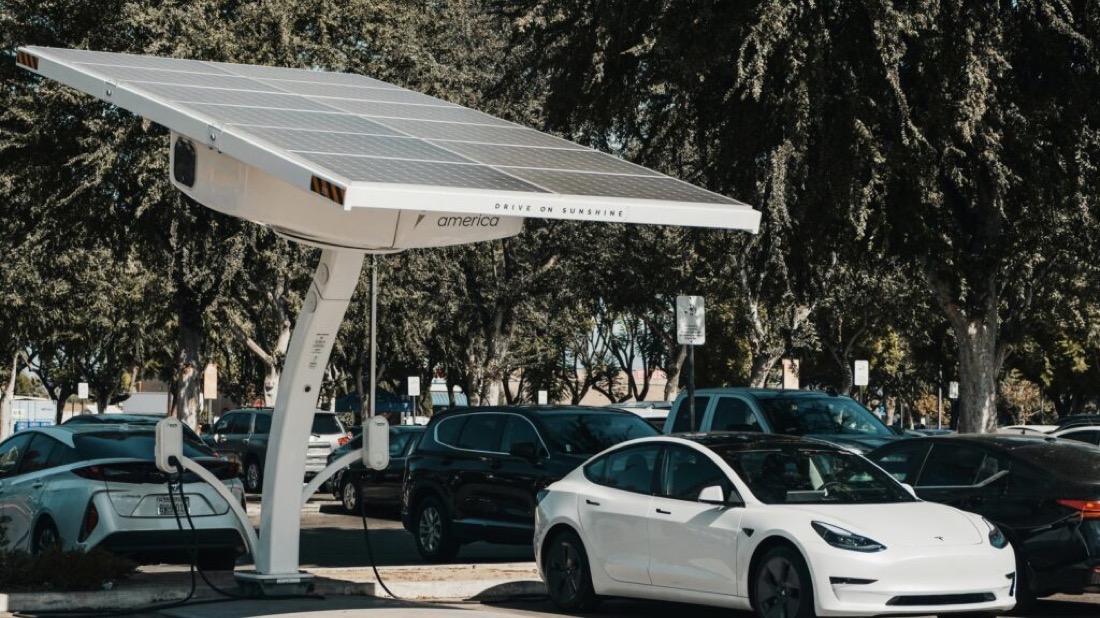
Having solar panels and an electric car at the same house changes the sums. The energy left over at midday, which would otherwise be exported to the grid for a few cents, can go into the car. That is solar charging, and nothing exotic is needed to get it: a charger that supports it and a measuring device properly fitted.
How surplus charging works
A photovoltaic system turns light into direct current and an inverter converts it to alternating current, which is what the house uses. When production exceeds consumption, the surplus is exported to the grid.
Surplus charging intercepts that leftover. A sensor or a meter measures in real time what comes into and goes out of the home, and the charger adjusts its power to use only what is spare. If it clouds over, it drops. If the sun comes back, it rises. The car becomes, in effect, the biggest battery in the house.
Which chargers do it
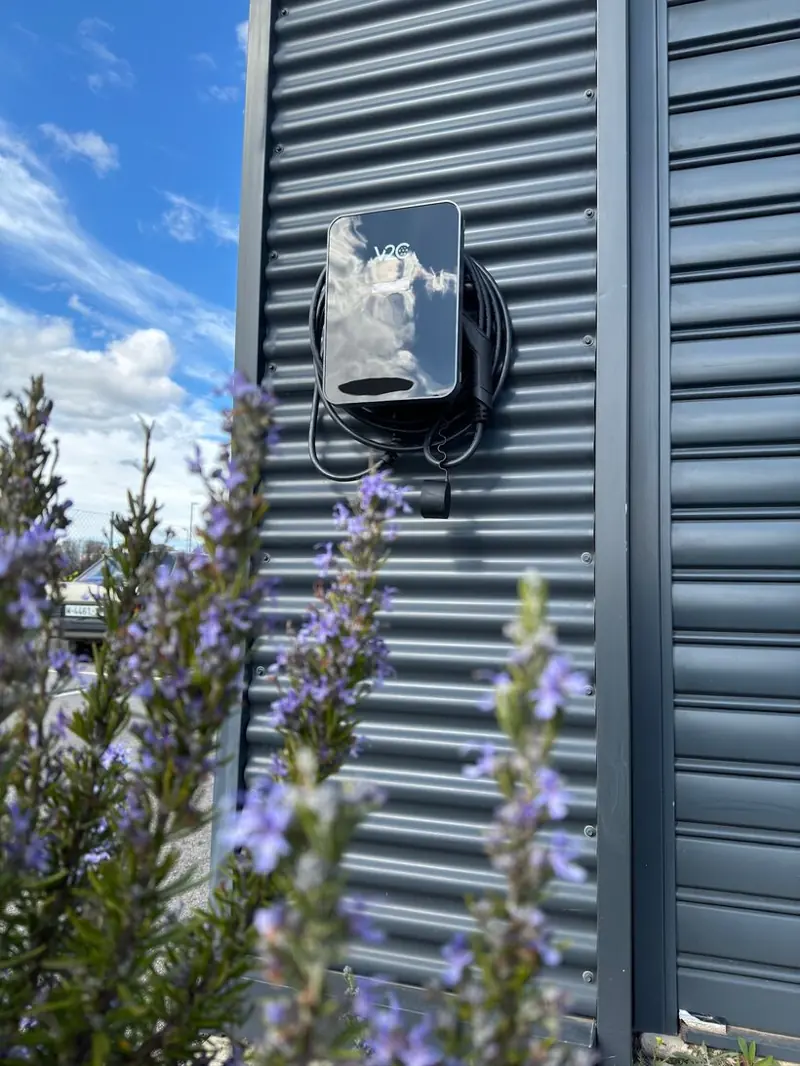
Not every unit has it, and it is worth checking before you buy. In our charger range, charging from photovoltaic surplus comes as standard on the Woltio Pro, which also includes the measuring sensor, and on the V2C Trydan. The Policharger NW takes it as an option, and the Orbis Viaris Uni Plus is designed to integrate with photovoltaic systems.
If you already have panels, the Woltio Pro page is the most sensible starting point on installed price. And if you also need the charger to talk to a management platform, the V2C Trydan page.
With a battery or without
Without a battery, you charge with sun: the car makes use of the middle hours of the day. It works well if you work from home, if the car spends the morning parked or if you have a second vehicle.
With a battery, the surplus is stored and can be used at night. You gain flexibility, but the investment goes up and the payback period gets longer. Before deciding it is worth looking at the real pattern of use: what time the car is at home and how many kilometres you do a day.
There is a third option that is almost always forgotten and costs nothing: scheduling charging for the off-peak hours of your tariff. If the car is only at home at night, this pays off better than any extra investment.
In a detached house
This is the simplest case. The panels go on the roof, the charger on the garage wall and the sensor in the main consumer unit. Dynamic load balancing makes sure the house and the car together never exceed the contracted power, so in most cases there is no need to increase it.
In a residents' association
There are two separate installations here and it is worth not mixing them up. Solar panels on a shared roof are governed by the residents' association agreement and by how collective self-consumption is shared out. A charging point in a privately owned space, on the other hand, only has to be notified: the Horizontal Property Act does not require approval. How each one is approached is explained in installations in residents' associations.
In a business
An industrial unit with a large roof and its own fleet is where this fits best. The vehicles are parked exactly when the system produces most, between ten and five, so self-consumption is high without any need for storage. And if consumption has to be billed per driver, the unit with an MID meter and a card is the one that solves it, as you can see on the Orbis Viaris Uni Plus page.
Frequently asked questions
Can I charge the car on solar power alone?
It depends on when the car is at home and how much capacity the system has. With the car parked during the day and a generously sized system, a good share of the charging can come from the sun. Covering one hundred per cent consistently requires storage.
Do I need to increase my contracted power?
Usually not. Dynamic load balancing adjusts the charger's power according to what the home is using, so the contracted power is never exceeded.
Will any charger do?
No. To use the surplus the unit has to support it and a measuring device has to be fitted. In the charger range we say model by model which ones do it.
What maintenance does a solar system need?
Not much: cleaning the panels from time to time and an annual check of the inverter and the wiring.
Are there grants for this?
For the charging point there are, and there are two: the 15% income tax deduction and the Energy Saving Certificate. They are set out in detail in the article on grants currently available for installing a charging point ES. Self-consumption schemes go through a different route and depend on the regional government.
If you want to fine-tune the numbers before deciding, in our calculators you can compare the running cost of an electric car against a combustion one and estimate the charging time for your model.
Can we help with your installation?
If you still have questions about your own case after reading this, tell us and we will look at it with no obligation.