

Small wind power for charging an electric car
Published 17 March 2024 · Updated 3 September 2026
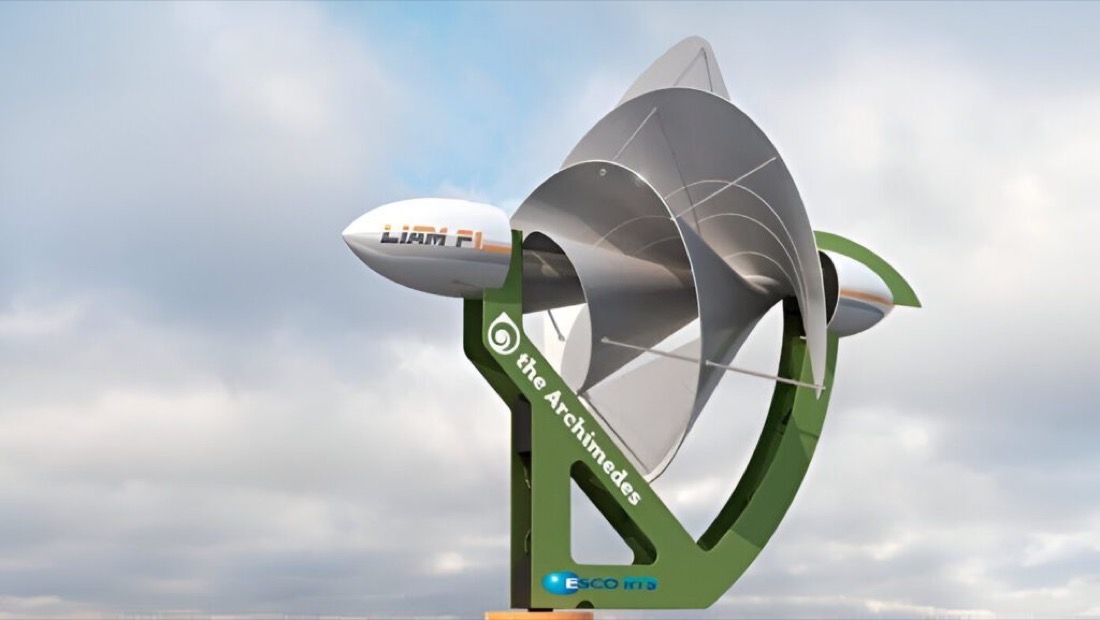
Small wind is wind generation on a small scale, with units that usually range from 3 to 60 kW and are installed next to the point of use. The question we always get is the same: will it charge my car? The short answer is that it can, but only in specific places and almost never on its own.
What it brings to a charging point
A home charger draws 7.4 kW at full power, and on three phase it can reach 22 kW. A small wind installation does not cover that on a sustained basis: what it does is reduce the energy you buy from the grid over the year, not feed the charger directly and independently.
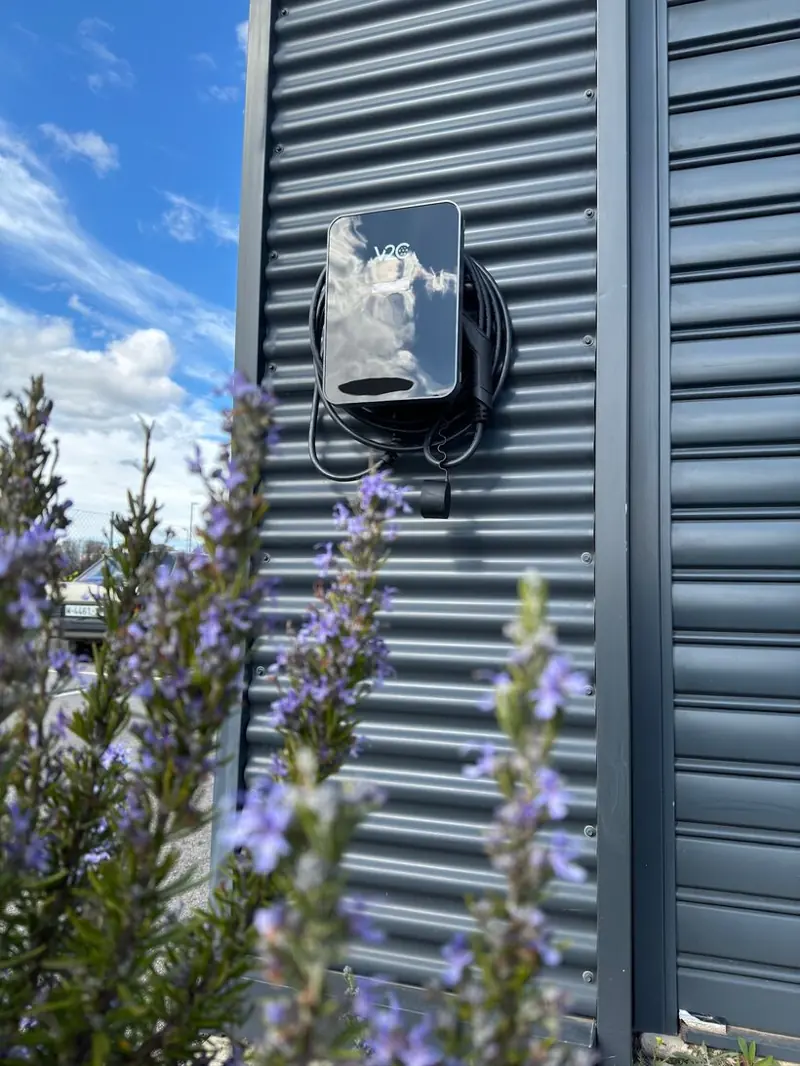
That is why, when it fits, it fits as a complement. The system feeds the house, the home's consumption drops and the charging point takes what is spare, exactly as it would if it came from solar panels. The equipment that makes that adjustment is the same: a charger with dynamic load balancing and a measuring sensor in the consumer unit. The ones that have it are marked in the charger range.
When it makes sense and when it does not
It makes sense if three things are true at once: steady wind, measured at the site; enough land to separate the mast from the house and the boundaries; and workable local planning permission. If one of them fails, the project stops standing up.
It makes no sense on a terraced house, on a small plot or in a built-up area. Wind close to the ground and among buildings is turbulent and irregular, and a turbine in those conditions produces far less than its power curve promises.
In most of the homes where we install a charging point, what pays off is solar: it is cheaper, it has no moving parts and it produces precisely during the hours when the car tends to be parked. We cover it in the article on solar power and electric car charging.
The technical side
Small wind covers a wide range, from around 3 kW for a home up to 60 kW for agricultural or industrial use. Output depends above all on the height of the mast and the wind regime at the site, far more than on the turbine model.
Before sizing anything you have to measure. A year of wind data at the site, at the planned height, is what separates a serious estimate from a hope. Without that measurement, any output figure is an assumption.
Does it pay for itself
It is worth being clear: domestic small wind has a high up-front cost and a long payback period, over a decade in most of the cases we see. Solar of the same capacity pays for itself considerably sooner.
That does not rule it out. On an isolated property, with good wind and no convenient grid connection, the equation changes completely, and more so combined with panels: the sun produces in summer and by day, the wind tends to produce in winter and at night, which is exactly when the car is at home.
How an installation is approached
The order is always the same. First, measure the wind over a full year. Then check the planning rules: distances to boundaries, maximum permitted height and the licence. Then size the equipment to what was measured, not to what you hoped for. And lastly the electrical side, which is where it meets the charging: consumer unit, protective devices to the REBT and to ITC-BT-52 if there is a charging point, and registration with the regional industry authority.
That last part is the one you cannot improvise, and it holds just the same for wind, for solar or for a charger. We go into it in the article on why to choose an accredited installer.
In short
Small wind is a good tool in the right place and a bad investment everywhere else. If your case is a house with a garage and you want to cut the cost of charging the car, start with a properly sized charging point, with dynamic load balancing and a time-of-use tariff, and look at generation afterwards. The fixed installation prices are in the charger range, and the grants currently available for installing a charging point ES apply to the charging side.
If you want to run the numbers first, in our calculators you can compare the running cost of an electric car against a combustion one and estimate the charging time for your model.
Can we help with your installation?
If you still have questions about your own case after reading this, tell us and we will look at it with no obligation.